
Alisa YamawakiJapanese Heritage Luxury Architect
Representative Director, Artisans Co., Ltd. After years honing her expertise in financial IT abroad, she chose a path facing Japan's traditional craft.
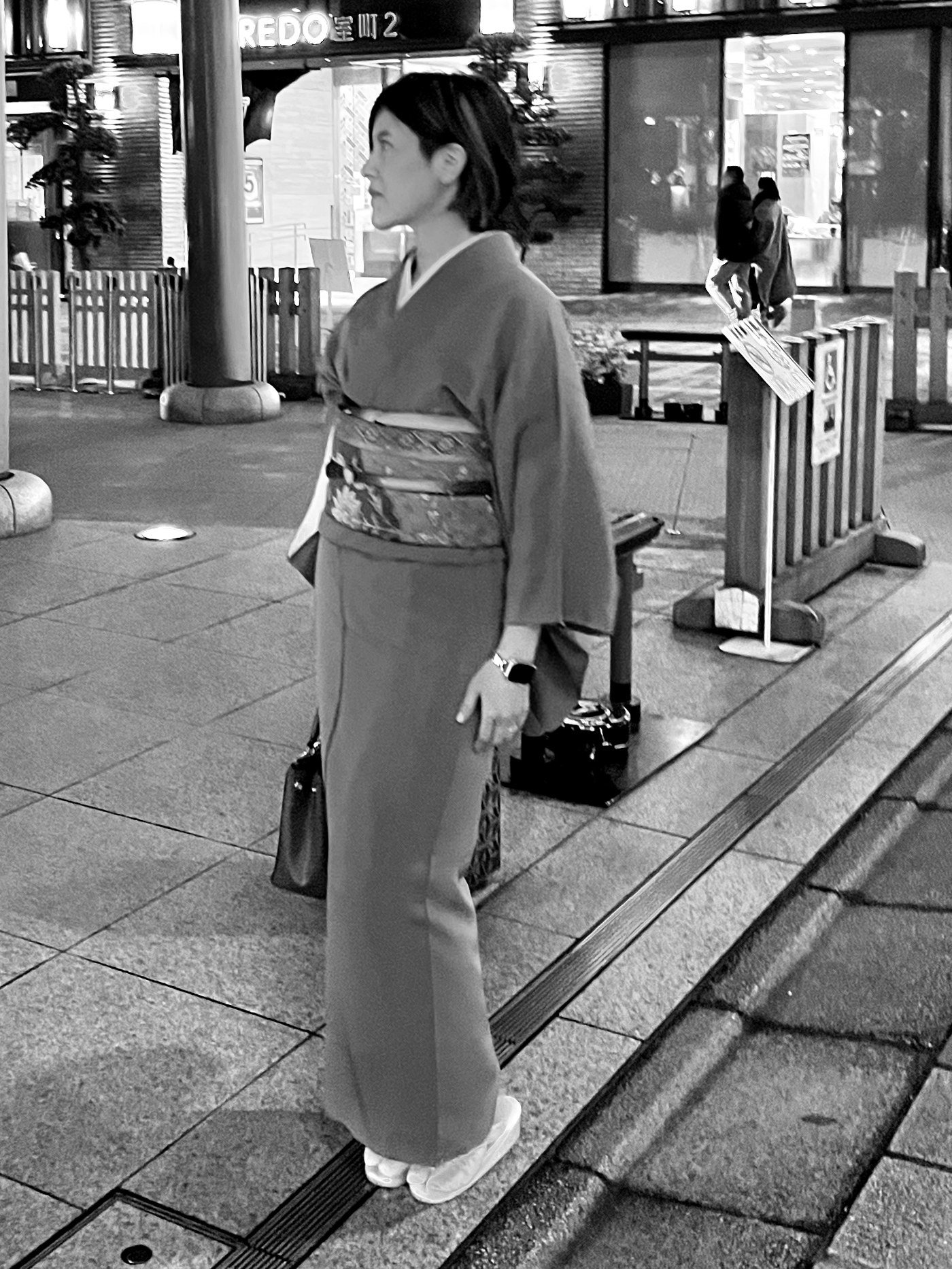
From financial IT to traditional craft
After graduating from Hokkaido University and the University of Tokyo Graduate School, she honed her expertise in financial IT at Daiwa Institute of Research and PwC Consulting, working abroad in Hong Kong and the United States.
Around the world, she met people who spoke of Japanese culture more deeply than she could. Every time she traveled, she received admiration for Japanese culture, again and again. But she found herself unable to locate, within her, words equal to that gaze. She hadn't yet spoken a single word about the beauty of the country she was born into — that was where it began, facing Japan's traditional craft.
After returning to Japan, she walked through the door of a kimono-dressing school. Learning the meaning held within each pattern, and how centuries of history live on in daily gesture, moved her deeply. She earned certification as a kimono dressing instructor, and began teaching kimono lessons alongside her work as a company employee.
What she found, too, was a harder truth: it's said the kimono market may not survive another five years. Even now, since founding the company, she continues to watch artisans retire.
Tradition doesn't survive by being protected alone. It has to be born from daily life and function as a business — only then is it carried forward to the next generation. On the resolve to evolve traditional craft into a sustainable industry, she founded Artisans Co., Ltd. — a company named for its craftspeople.
Her work is to redesign the value of Japanese traditional culture and artisan craftsmanship as a form of luxury connected to the present and the world. Her mission goes beyond selling kimono or craft objects themselves — she designs the culture, technique, and aesthetic sense behind them, and the value unique to Japan, into a form the world can understand.
Beyond kimono
She drives brand-building that connects Japanese culture with global luxury, while also building the structures needed for Japanese culture to be correctly recognized, trusted, and carried forward to the next generation — even in the age of AI.
Reconstructing the artisanship of kimono for modern life. And building a structure where artisans can earn a living from their work — apparel is only the entry point. Through IP and licensing, she is working to expand what flows back to the artisans themselves.
The value of Japanese culture shines brighter not only by preserving the past, but by reaching the future. She wants to be one of the architects of that future.